 Start Your Project
 Call Us Today


This paid piece is courtesy of SiouxFalls.Business.
Call them key ingredients for growth.
The first is data – being able to not just capture but also manage and analyze the key informatics that drive your business.
The second is automation – being able to take what your data has revealed, leverage technology and gain the efficiency needed to support expansion.
One company, based in Sioux Falls, offers expertise in both.
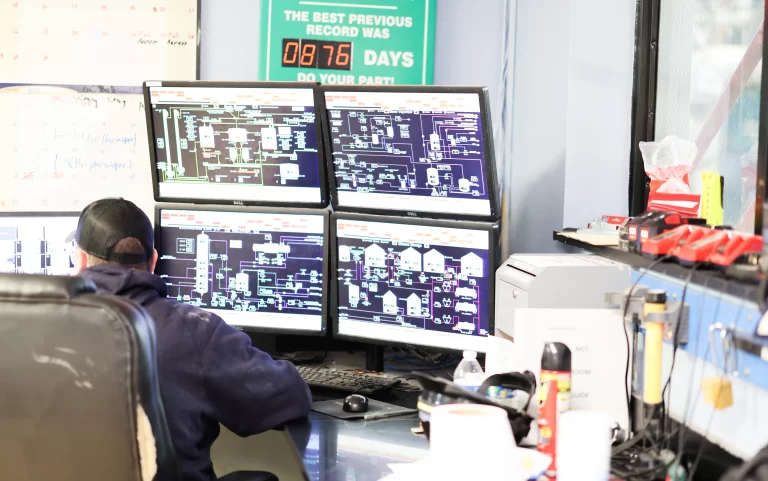
Direct, a fast-growing tech company, includes business units that deliver automation, IT, security and data solutions to help businesses run smarter and safer.
“Data can mean different things depending on your business,” said Dan Buresh, director of Direct’s data management group.

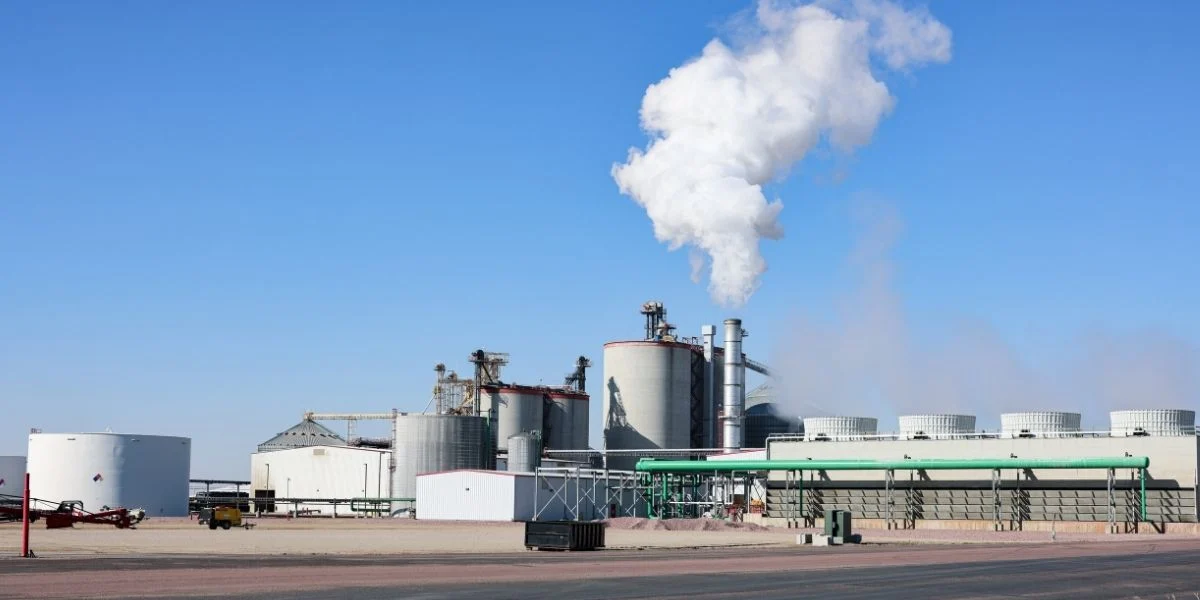
“For a small business, it might be information around accounting. For an ethanol plant, data applies to the chemical process – monitoring pumps and valves and how they’re adding ingredients and producing alcohol.”
Bring it all together in a central repository and businesses gain a clear line of sight into their operation.
“We might be processing data related to everything from weather to commodity inputs and outputs, but then we can start analyzing it,” Buresh said.
“With an ethanol plant, we might be looking at quality of yeast or temperature – all those things affect the chemical process, and that’s what we can help monitor.”
Direct replicates the data in its cloud, offering redundant storage and then brings multiple sources of data together for seamless reporting to clients.
“We often end up having more data than their facilities because we’re integrating across their system,” Buresh said.
“And then, as clients grow and add new facilities, anywhere in the world, they can view what’s happening there through a central system we’ve created for them. It gives a level of visualization into what’s happening at a plant that someone otherwise might have to call or physically visit to achieve.”
Data analysis is key not just to seeing opportunities for growth but also to catching problems before they disrupt business.
For instance, data might show that a piece of equipment that usually operates at one level has started to operate less efficiently, allowing it to be serviced or replaced before it fails.
“It’s also a great way to address bottlenecks and determine where you might need to expand,” Buresh said.
“It can take a really high-level operator to find the right places to make these fixes without the help of data analysis, and now they’re driving decisions based on what the data is telling them, and it’s taking out the guesswork.”
Direct can work with any industry, he said.
“For instance, we’re working with a clinic in Sioux Falls that uses multiple software platforms for things like patient records, surveys and counseling,” he said.
“It used to take nearly all of one person’s time each week to pull data from these individual sources and compile a report. We’ve been able to connect applications and map the data so that now every morning a data set is produced, that saves four days of work every week.”
In more technical settings, applying automation can be a significant driver of growth.
Direct Automation works with clients in the biofuels industry, oil and gas, and in the sugar beet industry.
“That’s our bread and butter, but we also can tackle what our clients are dreaming up in robotics where people just need solutions,” said Brent Steven, director of automation. “We’re not eliminating labor, but we’re improving what they can do with their labor force and bringing more efficiency.”

When he began with Direct 12 years ago, it was a four-person team. Now, companywide, there are 150 people, and the automation business unit has grown from 10 clients to more than 100.
“We’ve gone from being focused on the Midwest to working from ocean to ocean,” Steven said. “I just met with a customer that does a lot of work in the U.S. but also has a significant presence in Brazil where they’re trying to fill a gap and find quality resources.”
Direct can help identify areas of a business that could benefit from automation, whether it’s robotics or high-speed automation controls that reduce error and optimize the workforce.
“Dan and I work very closely together,” Steven added. “My side is on the plant floor running functions, and he’s connecting the software on top and extracting data. He can see issues mechanically that can’t be diagnosed otherwise unless someone is constantly monitoring, so we often have customers who use all our services, and it’s a really strong benefit to them.”
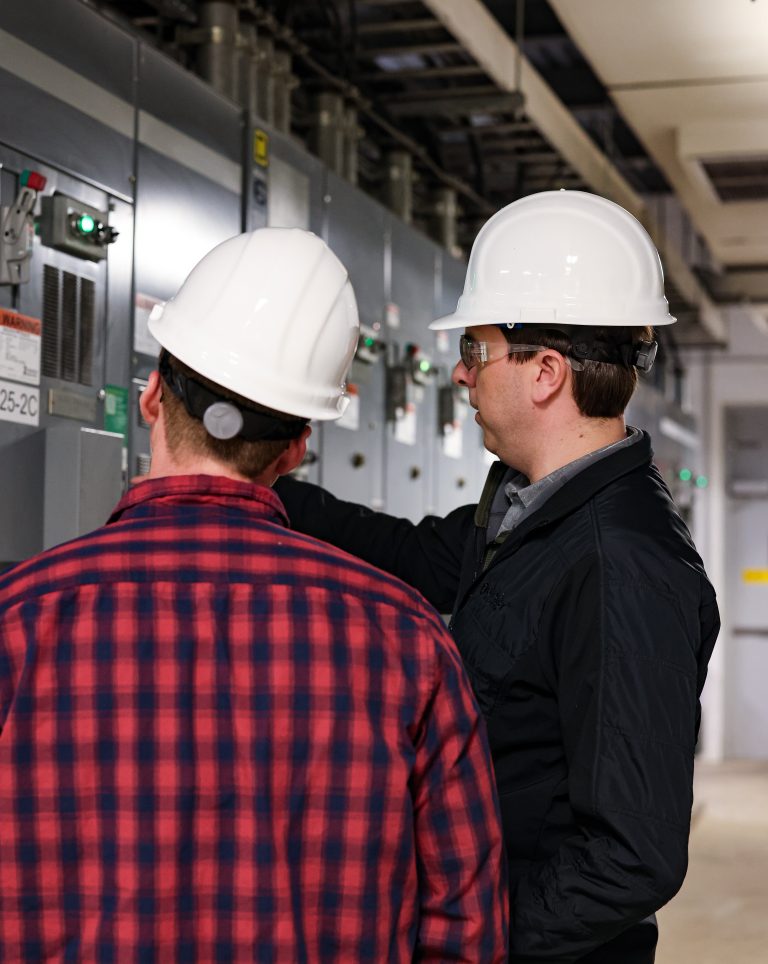
When a customer sees additional opportunity to modernize, “we have a full manufacturing facility,” Steven said. “We can build robotic cells and do custom fabrications.”
For instance, one customer is attempting to build a fully autonomous facility, he said.
“They’re putting a lot of time and energy into an aging facility, so we’re working to implement autonomous solutions that take over different portions, including even railcar loading and unloading so they need no help to operate,” he said.
“In another case, we’re working with a medical client to add high-speed vision to the operation that will improve quality control. They produce needles and syringes that are going by a high-speed camera at a rate of five or 10 per second, so we’re applying technology that will help ensure everything produced is meeting specifications.”
The team thrives on rising to the challenge and supporting growth, both Direct leaders said.
“It’s rewarding to see our clients grow and expand into new markets,” Buresh said. “A lot of what we do is driving key decisions and operational changes that are helping them achieve success.”